June 9, 2026
Esteban Zuleta on Leadership in Equipment Finance
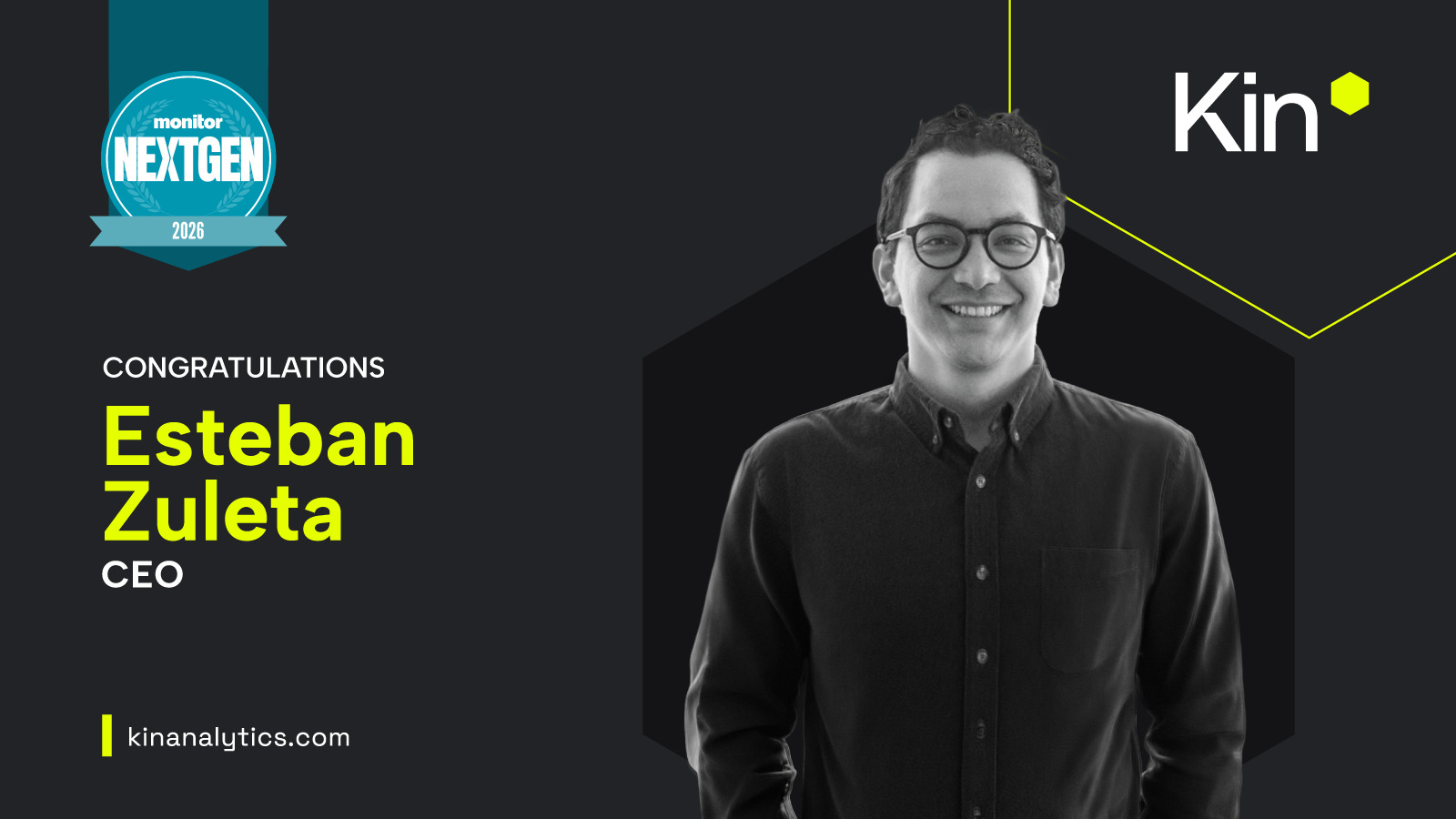
"Empathy isn't softness. It's the fastest way to build a team that acts with confidence and a sense of ownership. When people feel understood, they stop asking for validation and start making real decisions. That's what I'm after, not a team that follows well, but one that leads from wherever they stand."
— Esteban Zuleta, CEO, Kin Analytics
Why Equipment Finance: Coming for the Data, Staying for the Decisions
Esteban came to equipment finance for the data. The industry had something most others don't: a deep, detailed record of how businesses behave when they borrow, what assets hold their value, and how risk actually plays out over time. Most of that information was sitting there, underleveraged. That was the entry point.
But he stayed for the decisions. What he's learned over time is that the work was never really about building better models. It was about helping people make better calls- credit officers, portfolio managers, and executives who carry real risk on their books every day. The model is just the input. The decision is what matters, and decisions are made by people working under competing pressures, with incomplete information, and habits that don't change easily.
That's the core shift in his thinking: transformation in this industry isn't a technology problem. It's a judgment problem. How do you build something that earns enough trust to actually change how someone decides? That's the harder question, and it's the one Kin spends most of its time on now.
Outcomes Over Output: The Shift He's Most Proud Of
Asked about the achievement he's most proud of over the past year, Esteban points not to a product, but to a discipline: reorienting the team around what actually moves the needle for clients. Not activity. No output. Outcomes.
Kin had reached a point where the business was growing, but the team was pulled in too many directions. Everyone was working hard, but not everyone was working on the right things. So the company made a deliberate shift in how it thinks about its work altogether. Every effort it takes on now has to connect directly to something meaningful for the people it serves. If that line can't be drawn clearly, the work doesn't happen.
What that change revealed is something he feels strongly about: the job of a services company isn't to deliver work. It's to change something real for the people you serve. That sounds obvious until you're in the middle of a busy quarter and everything feels urgent. Building that discipline across a team, getting everyone to ask whether what they're doing actually matters to the client, is harder than any technical problem the company has solved. And he believes it's what made Kin genuinely better this past year, more than anything else.
A Leadership Style Built on Empathy
Esteban describes his leadership style in three words: empathetic, direct, ownership-first.
Empathy comes first, not as a soft skill, but as an operating principle. When he understands what someone on his team is actually carrying, he can give them the right support instead of the generic kind. The same goes for clients. When the team genuinely understands the pressure a credit officer is under, they build things that fit that reality instead of things that simply look good in a demo.
Direct and ownership-first follow from empathy, not despite it. Because he cares about what someone is building toward, he tells them the truth. Because he understands what they're capable of, he holds them to real accountability rather than shielding them from it. That combination is what builds culture: people who feel genuinely understood and genuinely trusted at the same time.
Technology Opened the Door. Adoption Is Still the Work.
For Esteban, the most honest observation about technology this year is that it has become the easier part. AI has dramatically lowered the barrier to building things that used to take months now take weeks, sometimes days. That's real, and it matters.
But the harder problem hasn't changed. The gap isn't in the tools anymore; it's in the decisions. Clients can access better models and better data than ever before, and many are still making portfolio decisions the same way they did five years ago. Not because they lack the technology, but because nobody has bridged the gap between what the technology surfaces and how decisions are actually made within their organizations.
That's where Kin has shifted its energy: less time on the build, more time on the adoption. Technology opened the door. Getting people to walk through it is still work.
Advice for the Next Generation: Stay Curious, Stay Close
For a recent graduate entering equipment finance today, Esteban's advice is deceptively simple: stay curious and stay close to people. Both sound obvious, but they're genuinely rare.
Be curious about how decisions get made, not just what the right answer is. Be curious about why clients think the way they do. And be empathetic enough to understand that behind every credit decision, every portfolio review, and every difficult conversation, a person is trying to do their job well under real pressure. The people who build that combination early are the ones who end up leading.
That conviction extends to how he believes the industry should develop its next wave of leaders. The biggest mistake the industry can make right now is assuming digital tools reduce the need for deep relationships. They don't; if anything, they raise the bar. Clients have more information, more options, and less patience for surface-level engagement. The next generation needs to be trained not just to use technology well, but to stay genuinely close to the people around them while doing it: present with their team when things are hard, present with clients navigating something new, and clear-eyed that trust is still built the old-fashioned way, one conversation at a time.
/Like this post?




.webp)