
December 4, 2025
Ep 1: The New Era of Underwriting in Equipment Finance
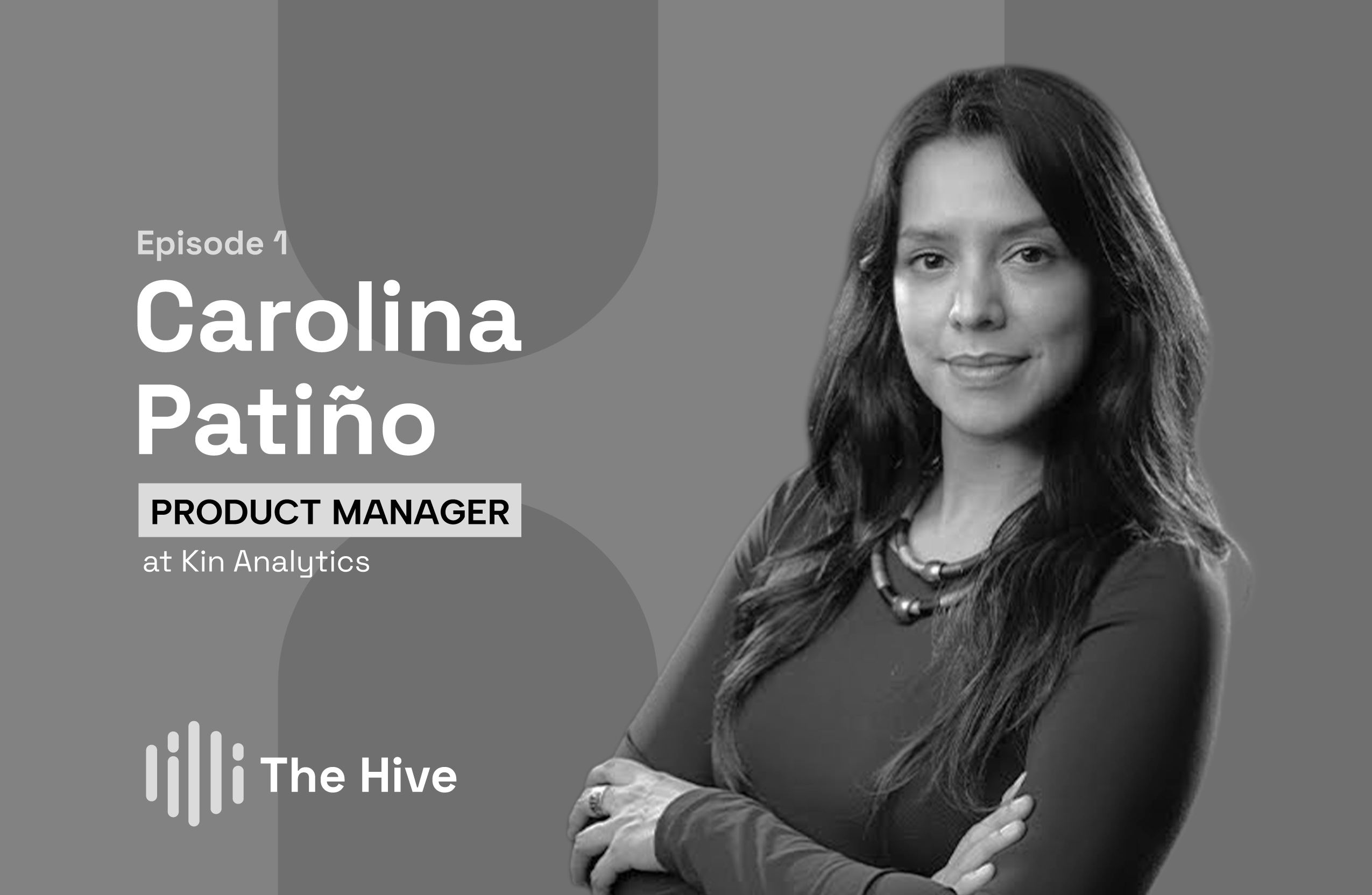
Welcome to The Hive Podcast.
For our first episode, we dive into the core of lending with Carolina Patiño, Product Manager at Kin Analytics. We analyze the most important aspects of underwriting and discuss the revolutionary technology that is shaving weeks off the approval process.
The Equipment Finance industry is at a critical juncture. While the underwriting process (credit risk assessment) has traditionally relied on experience and expert judgment, current challenges demand a complete transformation. The core problem: a manual bottleneck that consumes time, reduces efficiency, and, most importantly, stifles growth.
Want to hear from the experts?
This article transcribes and expands on the key insights from The Hive by Kin Podcast Episode 1, where Juan Patiño and Carolina Patiño from Kin Analytics discuss how AI, data, and technology are reshaping underwriting in equipment finance.
At Kin Analytics, we believe the future of lending is not about replacing the analyst, but about empowering them. This analysis explores how Artificial Intelligence (AI), automation, and the strategic use of alternative data are redefining traditional underwriting, turning a process that once took days or weeks into a matter of minutes or hours.
The Traditional Underwriting "Chokehold": Manual Labor vs. Analysis
Traditionally, an underwriter’s day in Equipment Finance is dominated by manual and repetitive tasks, as explained by Carolina Patiño, Product Manager at Kin Analytics.
1. The Manual Process Phases
The initial phase is the heaviest, often described as document-heavy and error-prone:
- Deal Entry and Documentation: The manual input of data from applications, bank statements, and legal documents into LOS or CRM systems.
- Verification and Credit Analysis: Intensive KYB/KYC tasks, online searches for owners, verification of SOS filings, and applying expert judgment using bureau scores (FICO, Paynet).
- Closing and Funding: Final documentation review and contract drafting.
The Effort Imbalance: The Chokehold
The main chokehold (bottleneck) lies in the disproportionate effort: the majority of the underwriter's time is spent on manual data gathering and verification, and the minority on deep credit analysis.
Kin Analytics explains that: "The minority of the work is dedicated to this more analytical aspect when it should be the opposite. Analysts should be delving into the information and analyzing the client's profile... rather than doing these more manual steps."
Expert Judgment Reinforced by Data: Eliminating Subjectivity
In traditional credit evaluation, subjectivity is a constant factor. The same risk score or past incident (like an old bankruptcy) can be interpreted differently by various analysts.
The incorporation of automated scoring systems aims to eliminate this subjectivity by requiring decisions to be data-backed, while still valuing the analyst's experience.
How Data Changes Expert Judgment:
- The analyst uses the data to back up or refine their intuition. For example, a client with a past bankruptcy may still be approved if the model uses data to show they are operating in a growing industry and have a recent clean payment history.
- Carolina Patiño stresses: "We want to incorporate the analyst's experience, the expertise that they've gathered over the years into the decision making. But we want to help them make it better or kind of have a reason to back their decision with data."
The Power of Alternative Data: Going Beyond the Conventional
Traditional data sources are often insufficient for a holistic risk analysis in specialized sectors. Kin Analytics champions the use of alternative data to enrich credit scoring.
Speed and Accessibility: Why Transformation is Happening Now
The digital transformation in Equipment Finance is accelerating due to two primary factors:
- Technology Accessibility: AI and Machine Learning solutions are more available, allowing companies to modernize without requiring in-house data scientists.
- Competitive Pressure: The demand for speed is critical. Processes that traditionally took days or weeks (especially for complex deals) are now being cut down to hours or minutes.
Key Technologies in the Process
Roadmap for Modernization: Slow, Strategic, and Trust-Based
For successful system modernization, the key is to start as soon as possible, but without disrupting current processes.
Priority #1: Data Cleansing and Standardization
"Start to give data the importance that it needs to have," advises Carolina Patiño. Data is the core asset.
- Data Cleaning: Invest effort in cleaning historical data from legacy systems. This data is invaluable for building a robust credit scoring system.
- Standardization: Ensure complex variables like "industry" are collected in correct formats (e.g., SIC codes) to make the data usable for future modeling.
Priority #2: Gradual Implementation and Change Management
- Change Management: The technology must be something the user wants to use because it makes their job easier, not something imposed. Include underwriters in the process.
- Automate Extremes: Start by automating the most obvious decisions: auto-decline (high risk, active bankruptcy) and auto-approval (very low risk, proven history).
- Integrate the Score: Initially, use the custom score as an extra input or tool for the analyst, not the final decision maker.
Transparency and Compliance: The White Box is Key
Trust in technology goes hand-in-hand with transparency and regulation compliance.
- Trust Building: Analysts will trust the model when they see that its suggestions are accurate and they understand why a decision was made.
- White Box and Compliance: It is crucial for the model to be interpretable (White Box) so that Kin Analytics and the client can document and explain the decision, ensuring compliance with US regulations (e.g., excluding discriminatory variables like race and gender).
- Security: Compliance with GDPR and SOC 2 standards for client data security. For a deeper look at how GDPR is reshaping data governance and credit decisioning, you can read our analysis here: https://www.kinanalytics.com/blogs/gdpr-ccpa-definitive-impact-on-credit-scoring
The Results: Speed, Savings, and Growth
Adopting this data-driven strategy yields tangible ROI:
Which tool or technology should we adopt first in underwriting?
Kin Analytics recommends that the first investment should be in data structure and cleanliness. If your historical data is poor, no AI tool will function correctly. Once data is cleaned and standardized, start with OCR to attack the data entry bottleneck.
Why is it essential for AI models not to be a "Black Box"?
It is vital for regulation and analyst trust. A White Box model allows Kin Analytics and the client to explain why an applicant received a specific score (e.g., due to low SAFER safety rating), making the decision auditable and defensible.
Will automation replace the credit analyst in Equipment Finance?
No. AI and automation augment the analyst's capability. The technology handles manual, repetitive tasks, freeing up the expert to focus on complex analysis and applying their judgment to improve credit policies.
Conclusion and Next Step
Underwriting automation is not a future trend; it is a competitive necessity. A shift in mindset, focused on data as the primary asset, is the first step toward capitalizing on the future.
If you are ready to stop losing deals due to slowness and want to reduce your default rates by up to 20% while increasing your approvals, the time to act is now.
Ready to transform your underwriting and get actionable insights from your data? Learn more about our solutions for Equipment Finance at Kin Analytics.
Follow us on:
Spotify, Apple Podcast and YouTube




.webp)

.jpg)